
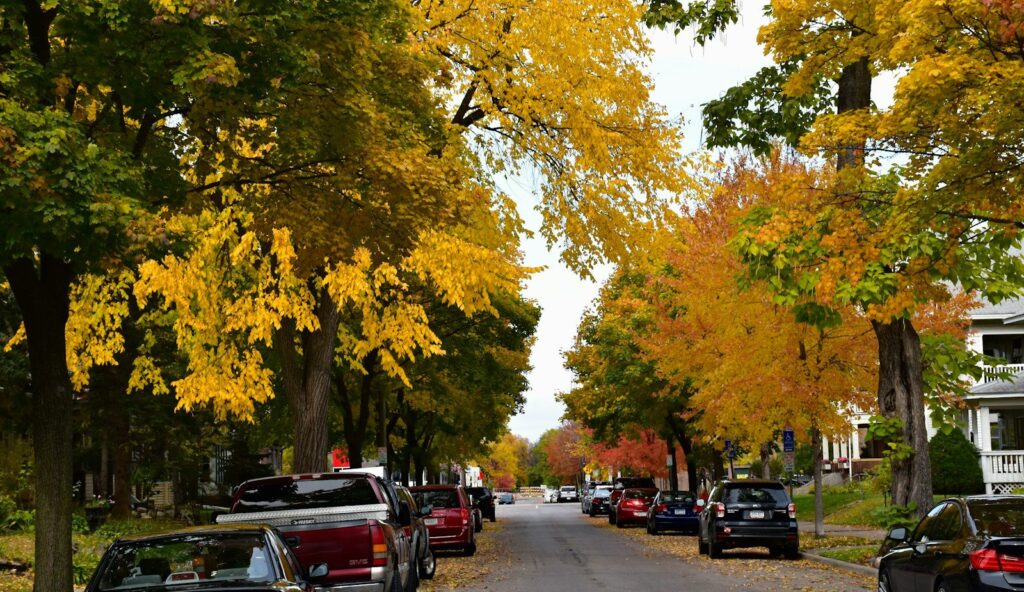
Minneapolis doesn’t sweep your block every week or every month. It does something more dramatic: twice a year, in spring and fall, crews sweep every street in the city from curb to curb, and for those few weeks bright pink “no parking” signs pop up block by block. If your car is still there once the signs have been up for 24 hours, it can be ticketed and towed to the Minneapolis Impound Lot, where a standard tow costs $222. The fall 2026 sweep is now finished, so the next round is the spring sweep in April 2027. Here’s how to see it coming.
Minneapolis at a glance
- Tow
- $222 standard tow, plus $18 a day storage, plus the ticket
- Season
- Spring (from April) and fall (mid-October to mid-November)
- How often
- Once each sweep, curb to curb; each sweep takes about four weeks
- No parking
- 7am to 4:30pm on your day, or until the pink signs come down
- Look up your day
- Minneapolis street sweeping map
How sweeping works in Minneapolis
According to the City, Public Works crews sweep more than 1,100 miles of streets from curb to curb twice a year, and in spring they also sweep nearly 400 miles of alleys. Each full sweep, spring and fall, takes about four weeks and comes with parking restrictions.
That’s very different from cities like Los Angeles or Chicago, where a permanent sign tells you the same day every week or month. In Minneapolis there is no permanent sweeping sign to memorize. Instead, temporary signs go up shortly before your block’s turn, and your block gets one sweeping day per season.
The City also sweeps at other times of the year, but that routine sweeping doesn’t affect parking. The rules in this guide apply to the two big seasonal sweeps.
Here’s a typical way people get caught. Imagine Sam visiting his sister from out of state in late October. He parks on a quiet street near her apartment on Sunday, sees nothing unusual, and doesn’t notice the pink signs that go up on Monday afternoon. By Wednesday morning the car is gone. Nothing about that street looked different when he parked, and that’s exactly the problem with temporary signs.
The pink signs and the 24-hour rule
The City says to look for bright pink “Street sweeping – no parking” signs, which show the days and times of the restriction. Crews post them at least 24 hours before sweeping a street.
| Rule | What it means for you |
|---|---|
| Signs posted at least 24 hours ahead | Check your block every day during the sweeping weeks, not just once |
| No parking 7am to 4:30pm | On your sweeping day, don’t park there until 4:30pm or until the signs are removed |
| Ticket and tow | Cars parked after the signs have been up 24 hours may be ticketed and towed |
| No exceptions for meters or accessible spaces | The City says the rule applies to metered spaces and accessible parking zones too |
The 24-hour rule isn’t just City practice. Minnesota law lets a vehicle be towed from an area posted for temporary restricted parking when the posting went up at least 24 hours in advance in a city of Minneapolis’s size (Minn. Stat. § 168B.035). That timing matters if you contest a tow; see the ticket section below.
One more thing: the City also posts temporary no-parking signs for street repair, tree trimming and other cleaning, and those restrictions don’t appear on the sweeping map. Pink sign or not, any temporary sign on your block counts. Our guide to temporary no parking signs covers how these work in other cities too.
When your street will be swept
The City publishes an interactive map that shows when each area is scheduled during a sweep. Look up your street as soon as a sweep is announced, then keep an eye on your block for the pink signs.
- Spring: the 2026 spring sweep started on Tuesday, April 21. The City says the next spring sweep starts in April 2027.
- Fall: usually from mid-October to mid-November, timed for falling leaves. The City’s page says the fall 2026 sweep is complete.
Because the fall sweep collects leaves, it overlaps with leaf season. Many cities ask residents not to rake leaves into the street; our guide to fall leaves and street sweeping explains why.
And once the fall sweep ends, winter rules take over. Minneapolis declares snow emergencies with their own parking rules and tows, which are separate from sweeping; see our guide to street sweeping and parking in winter.
Calls, texts and email alerts
There are two ways to get warned:
- Sign up for alerts. The City offers phone, email and text alerts through its news alert sign-up, linked from the street sweeping page.
- The courtesy call. If you have a listed phone number, you may get a prerecorded message the evening before your block is swept. The City says calls aren’t made after 9pm and that it can’t guarantee you’ll receive one.
Treat both as a backup, not a defense. The sign on the street is what counts. If you’re new to the city or visiting, read our first-week guide for newcomers, and see street sweeping alerts and reminders for how other cities handle notifications.
Towed: the Impound Lot and the $222 tow
If your car disappears during a sweep, it’s most likely at the Minneapolis Impound Lot, 50 Van White Memorial Blvd. You can search for it online with your plate number or VIN, or call 311 (612-673-3000).
| Charge | Amount |
|---|---|
| Standard tow | $222 |
| Storage | $18 per day, assessed by midnight |
| Parking ticket | Issued when the car is released; paid separately |
Practical points from the Impound Lot’s own page:
- Hours: 8am to 10pm Monday to Saturday, 9am to 5pm Sunday. It’s closed on City holidays that fall on a weekday.
- Who can pick up: the registered owner, or a relative with the same last name.
- Payment: credit cards, Google Pay and Apple Pay are accepted. Personal checks have extra rules, and starter checks aren’t accepted.
- Unpaid tickets: if the car has five or more unpaid parking citations, it won’t be released until you deal with them.
Move fast: storage adds up every night. Our guide to getting your car back after a street sweeping tow has a checklist of what to bring.
Paying or contesting the ticket
Minneapolis parking tickets are paid to the Hennepin County Violations Bureau, not to the City. The Minnesota court system describes a street cleaning violation simply: the City posts temporary no-parking signs, and vehicles parked during the ban are ticketed and towed.
The court doesn’t publish one fixed street cleaning fine on that page; the most reliable way to see what you owe is to look up your citation online or call the Court Payment Center. Don’t sit on it: if you don’t respond within 30 days of the ticket entering the court’s system, late fees and higher penalties follow.
To contest, you can meet with a Hearing Officer. The court holds video hearings by appointment, and you can also go in person to the downtown Minneapolis location. A Hearing Officer may reduce or dismiss the charge or offer community service instead of a fine. Good evidence includes:
- Photos showing there were no pink signs on your block, or that they were hidden or knocked down.
- Anything showing when the signs went up, if it was less than 24 hours before you were ticketed.
- Proof that the car was parked before the signs appeared, such as a timestamped photo.
For more on what works, see evidence that wins a street sweeping appeal. If paying all at once is hard, the court says you can call the Court Payment Center to ask about a payment plan; our guide to parking ticket payment plans covers the basics.
Official contacts and links
| What you need | Where to go |
|---|---|
| Sweeping schedule map and alerts | Minneapolis street sweeping |
| Find a towed car | Impound Lot vehicle search |
| Impound Lot fees and hours | Minneapolis Impound Lot, 50 Van White Memorial Blvd |
| Pay or contest a ticket | Hennepin County Violations Bureau; Court Payment Center (651) 281-3219 |
| Everything else | Minneapolis 311, or 612-673-3000 |
Other city guides
- Chicago street sweeping
- Denver street sweeping
- Seattle street sweeping
- Street sweeping on Thanksgiving and Christmas 2026
- All 19 cities
Spotted something out of date? Report an error and we will check it against the official source. Missing a city? Request it here.
Last checked against official City of Minneapolis sources (Public Works and the Impound Lot), the Minnesota Judicial Branch and the Minnesota Revisor of Statutes: November 2026.