
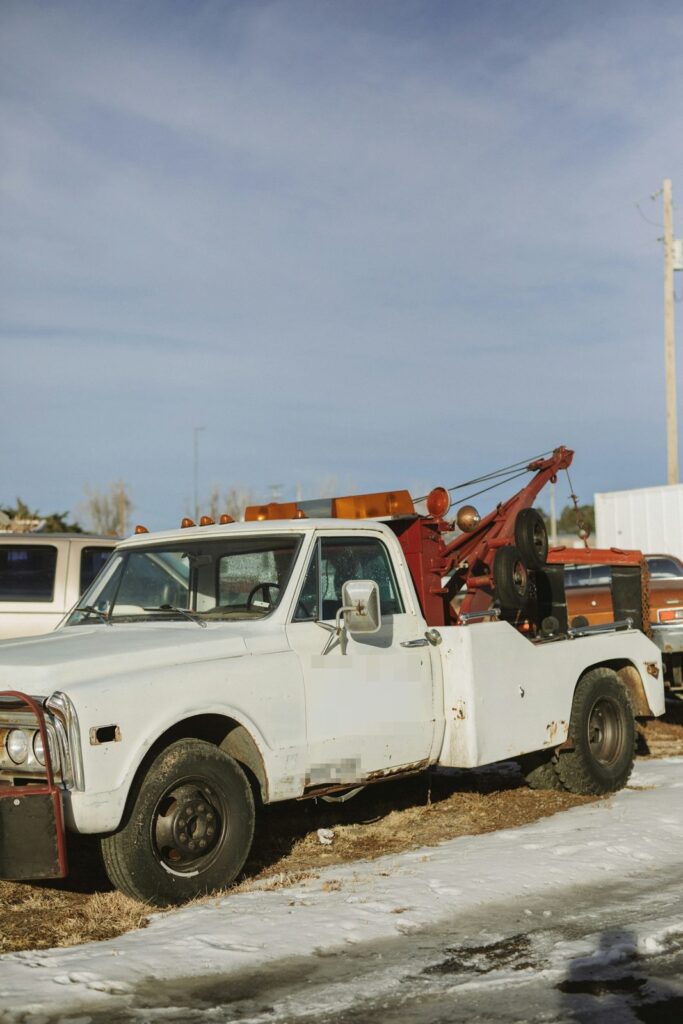
You park on a normal block on Friday, leave for the weekend and come back to an empty curb. Somewhere between Friday and Monday, paper signs went up for a moving truck, a film shoot or a crew repaving the street, and your car was towed. Temporary no-parking signs follow their own rules: cities require them to go up a certain number of hours ahead, and that notice period is both your protection and, if it was not respected, your best argument. Here is how much notice you get in the cities we cover, how temporary signs interact with street sweeping, and what to do if your car was towed.
Temporary signs at a glance
- What they are
- Paper or cardboard signs for moves, events, filming, construction or cleaning
- Typical notice
- 24 to 72 hours before they take effect
- Consequence
- Usually a tow, not just a ticket
- Street sweeping
- In San Francisco, temporary signs don’t cancel sweeping rules
- Best habit
- Check a parked car every day or two
How much notice you get, city by city
| City | Notice before enforcement | Typical use |
|---|---|---|
| San Francisco | 72 hours where there are no meters, 24 hours at metered spaces; construction tow zones must be posted and registered 72 hours ahead | Moving vans, events, construction |
| Santa Monica | Posted and inspected by police between 72 and 24 hours before | Moves, dumpsters, filming, events |
| Boston | At least 48 hours before a moving permit starts at 7 AM | Moving trucks |
| Seattle | At least 24 hours | Utility work, cleaning, events |
| San Jose | At least 72 hours (2026 sweeping tow test) | Street sweeping test areas |
| Chicago | About two days for orange sweeping signs | Street sweeping |
Sources: SFMTA’s temporary signage and construction tow-away zones pages, Santa Monica’s posting guidelines, Boston’s moving truck permit page and Seattle’s parking rules.
Two details are worth knowing. In San Francisco, the city says construction tows are not enforced unless the tow zone was registered. And in Santa Monica, signs that were not inspected by police at least 24 hours in advance cannot be enforced as tow-away signs; the city bases that timing on California Vehicle Code section 22651(m).
Reading a temporary sign
Temporary signs are usually printed on paper or cardboard and attached to poles, trees or parking meters. Before you walk away from your car, look for four things:
- The dates. Many signs cover a single day; some cover a whole week.
- The hours. “24 hours” means the whole day from midnight; others give a window such as 8 AM to 6 PM.
- Where it starts and ends. Signs come in pairs or more. In Santa Monica, they can be no more than 30 feet apart, so check whether your car is between two of them.
- “Tow-away”. Most temporary signs are tow zones. That turns a forgotten car into a tow and impound bill, not just a ticket.
Temporary signs and street sweeping
A temporary sign does not switch off the permanent ones. SFMTA states that temporary no-parking signs do not supersede existing rules, including street cleaning signs, No Stopping and No Parking signs, and red curbs. So if someone reserves a space for their move on your sweeping day, the sweeping window still applies to the rest of the block, and to the reserved space outside the move’s hours.
Some temporary signs are street sweeping signs. In Chicago, the orange paper signs that go up about two days before a sweep are the ones that count, and they can make the block a tow zone. Our guide on how to read a street sweeping sign explains how to tell them apart from the permanent signs.
A weekend example
Say you live in San Francisco on a block with no meters. On Friday evening you park in front of your building and leave for a three-day trip. On Saturday morning a neighbor’s moving company posts signs reserving three spaces, including yours, for Tuesday from 8 AM to 6 PM.
- Saturday 8 AM to Tuesday 8 AM is exactly 72 hours, so the notice meets the rule for an unmetered block.
- You come back Monday night and see the signs: you have until 8 AM Tuesday to move. No ticket.
- If you come back Tuesday at noon instead, the car may already be gone, and the signs were legal.
Now change one detail: the signs went up Sunday at noon. That is only 44 hours before the start, short of the 72 hours required for an unmetered block. A timestamped photo showing the empty poles on Saturday, or a neighbor who saw the signs go up, is the kind of evidence that matters when you contest the tow.
If your car was towed
- Find it. Call the city’s tow line or 311: in Seattle, for example, Lincoln Towing at (206) 364-2000. Each city guide lists the right number.
- Photograph the signs before they come down: dates, hours, position and how far they were from your car.
- Write down when you parked and anything that shows the signs were not there yet.
- Contest if the notice was short or the signs did not cover your spot. Our guide to appealing a ticket covers deadlines by city.
Reserving space for your own move
The same rules work in your favor when you are the one moving. In Boston, a standard moving permit reserves two spaces from 7 AM to 5 PM for one day; it costs $69 for non-metered spaces, signs must go up at least 48 hours ahead, and you are asked to put flyers on cars within half a block for two days before the move. In San Francisco, moving requests can run from 7 AM to 10 PM. Whatever the city, post the signs early, take photos of them in place, and check them again the night before.
Plan for the sweeping schedule too: if your moving day is also the block’s sweeping day, the truck may have the reserved spaces, but the cars you were planning to shuffle around still have to follow the sweeping sign.
Permanent signs can lead to a tow too; see our guide to rush hour tow-away zones.
Got a ticket because a temporary sign went up too late? See how to contest a street sweeping ticket.
Moving into a new place? Once the truck is gone, read our first-week parking guide for newcomers.
Spotted something out of date? Report an error and we will check it against the official source. Missing a city? Request it here.
Last checked against official sources from San Francisco (SFMTA), Santa Monica, Boston, Seattle, San Jose and Chicago: November 2026.