
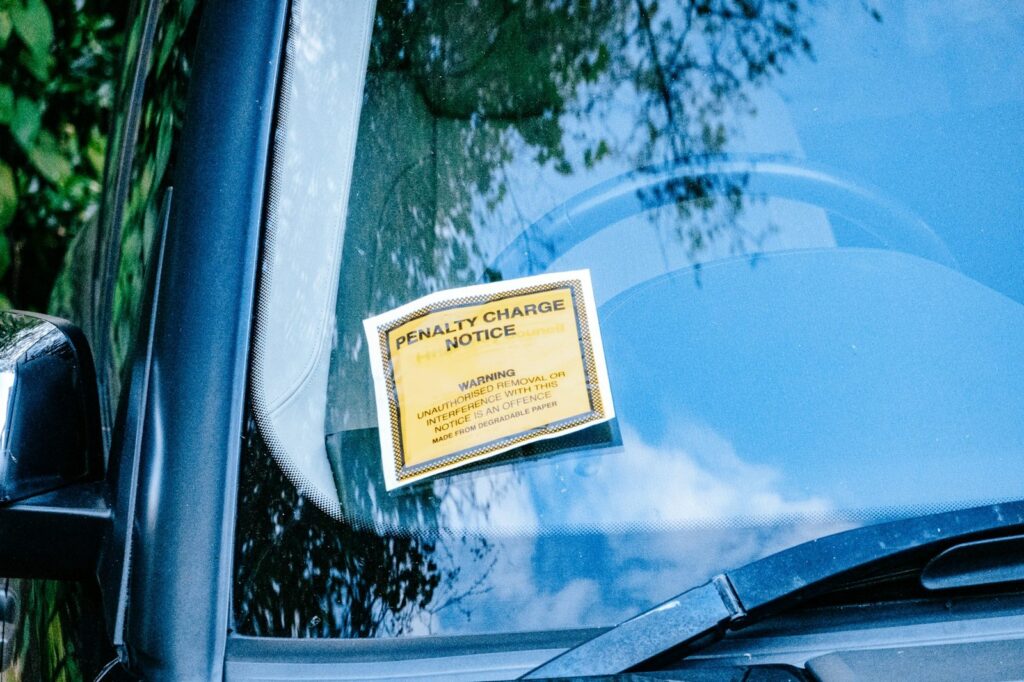
Since 2025, California has a parking rule that applies at almost every corner, with or without paint: you cannot stop, stand or park within 20 feet of a crosswalk on the side where traffic approaches it. It is known as the “daylighting” law, and it catches people precisely because many of those 20 feet still look like ordinary curb. Each city has rolled it out differently, from a $115.50 ticket in San Diego to warnings at unpainted curbs in San Francisco. Here is how the rule works, how to measure it, and what each of our California cities is doing.
The daylighting law at a glance
- Rule
- No stopping, standing or parking within 20 feet of a crosswalk, on the approach side
- With a curb extension
- 15 feet instead of 20
- Marked or not
- Applies to marked and unmarked crosswalks, painted curb or not
- Law
- California Vehicle Code 22500(n), from Assembly Bill 413
- Parking fine
- $115.50 in San Diego, $40 in Oakland
What the law says
Assembly Bill 413 was signed in October 2023 and added section 22500(n) to the California Vehicle Code. It prohibits stopping, standing or parking within 20 feet of the vehicle approach side of any marked or unmarked crosswalk, or within 15 feet where the crosswalk has a curb extension (a “bulb-out” where the sidewalk sticks out into the street). The law took effect on January 1, 2024, and cities have been allowed to issue citations since January 1, 2025.
The part that surprises drivers is that no sign or red paint is required. San Diego says it plainly on its daylighting page: citations can be issued whether or not signs or markings are present. Cities are painting curbs red where they can, but not every corner will be marked. Where a curb is painted red, the painted length is what applies, whether it is longer or shorter than 20 feet.
The idea behind it is visibility. A car parked right up to the crosswalk hides people about to step off the curb, especially children. San Francisco notes that the U.S. Uniform Vehicle Code has called for this kind of clearance for decades, and that California was one of the few states without it.
How to measure 20 feet
Twenty feet is roughly one and a half average cars, or about one large car length. San Diego gives two reference points:
- Marked crosswalk: measure from the edge of the painted crosswalk along the curb on the approach side.
- Unmarked crosswalk: measure from the line where the two sidewalks meet at the curb ramp. Most intersections have unmarked crosswalks even if nothing is painted on the street.
A practical example: on a two-way residential street in San Diego, you find a spot right before a stop sign at the corner. There is no red paint. If the front of your car is closer than a car and a half to the corner’s curb ramp, you are inside the 20 feet, and that is a $115.50 ticket. Back up into the next space, or park on the far side of the intersection instead.
Which side of the crosswalk
The rule only covers the side where traffic approaches the crosswalk, which is where a parked car blocks the view. According to SFMTA’s daylighting page:
- Two-way street: only the right-hand curb before the crosswalk is covered. After you cross the intersection, you can park closer to the crosswalk on the far side.
- One-way street: traffic approaches on both sides, so both the left and right curbs before the crosswalk are covered.
How each city enforces it
The law is statewide, but each city decided how and when to start writing tickets:
| City | How it is enforced |
|---|---|
| San Diego | Citations since 2025, with or without signs or paint; $115.50 under the city’s current fine schedule, which includes an $11 state surcharge (its daylighting page still shows the earlier $117) |
| Oakland | $40 fine set by Ordinance 13854 in 2025; enforcement since October 1, 2025, with a warning for first-time violations during that October (city page) |
| San Francisco | Under its 2025 plan, red curbs near crosswalks are ticketed, while unpainted curbs get warnings until they are painted; 65% of intersections were done by May 2026 |
| Unincorporated Los Angeles County | The Sheriff’s Department is issuing citations at $63 |
Other cities, including Los Angeles, Long Beach, San Jose, Berkeley and Santa Monica, are covered by the same state law. When in doubt, assume the 20 feet applies and check the city’s own page before you argue a ticket.
The street sweeping connection
Daylighting tickets often happen on sweeping day. You move the car off the side being swept, the block is full, and the only space left is the one right before the corner. It looks legal because the curb is gray. In San Diego, that move swaps an $83.50 sweeping ticket for a $115.50 daylighting one.
The fix is to plan the move the night before, while there is still choice of spots, and to remember that the far side of the intersection on a two-way street is usually fine. Our guides on reading sweeping signs and curb colors cover the other rules you are juggling when you pick a new spot.
How to avoid a daylighting ticket
- Leave a car and a half between your bumper and the crosswalk or curb ramp ahead of you.
- Follow red paint when it is there. If the curb is painted, the painted length is the rule.
- On one-way streets, check both curbs. Both sides before the crosswalk are covered.
- Remember unmarked crosswalks. Most corners count even without stripes on the street.
- Photograph your spot if you think you were outside the 20 feet. A photo showing the distance to the corner is the evidence you need to appeal the ticket.
Fire hydrants follow the same logic: in California the 15-foot zone comes from state law, painted or not. See how close you can park to a fire hydrant.
Spotted something out of date? Report an error and we will check it against the official source. Missing a city? Request it here.
Last checked against official sources from San Diego, San Francisco (SFMTA), Oakland and the Los Angeles County Sheriff’s Department: November 2026.