
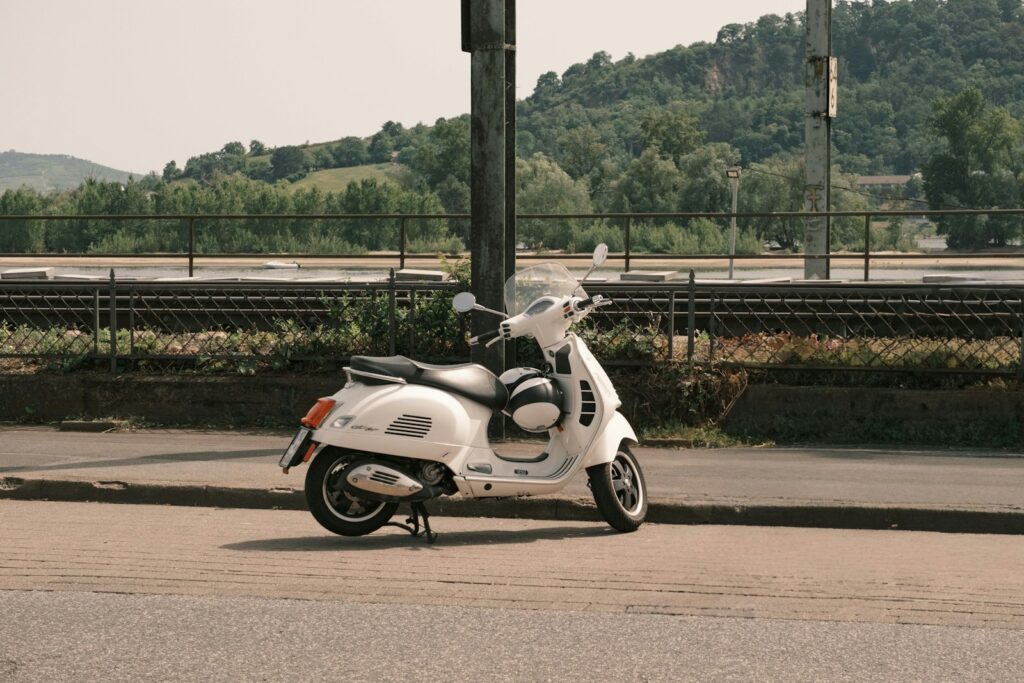
Leo rides a small scooter around San Francisco, and for months he had a favorite spot: a short stretch of curb at the end of his block, too small for any car. He figured that spot didn’t really count. No car could park there, so surely the street cleaning sign wasn’t meant for him. Then one Thursday morning he came out to a ticket tucked under his seat strap. The sweeping sign covered the whole side of the block, tiny gap included. A scooter is smaller than a car, but in the eyes of the parking rules it’s still a vehicle at the curb.
Motorcycles, scooters and street sweeping
- Short answer
- Yes, you have to move them like any other vehicle
- New York
- Motorcycles, scooters and mopeds follow the same rules as other vehicles
- San Francisco
- Motorcycles may park in any legal car spot, and the 72-hour limit applies
- Chicago
- Park at 90 degrees to the curb or risk a $25 ticket
- Never
- On the sidewalk, in any of these cities
Same rules as cars
It’s a common belief among riders that two wheels get a pass. Official sources say otherwise:
| City | What the official source says | Source |
|---|---|---|
| New York City | Motorcycles, motor scooters and mopeds must follow the same rules as other vehicles, and can’t be parked on the sidewalk | NYC 311 |
| San Francisco | Motorcycles may park in any legal car spot, plus designated metered and unmetered motorcycle spaces | SFMTA |
| San Francisco | Without other posted limits, a car or motorcycle may stay in one spot for up to 72 hours | SFMTA: Park Legally |
| Chicago | Motorcycles and scooters must park at a 90-degree angle to the curb; scooters and mopeds can’t use sidewalks or the parkway | City of Chicago |
None of these cities lists an exception for two-wheelers in its street cleaning rules. So the safe reading is the simple one: if a car would get a sweeping ticket in that spot, so will your bike. For the details in each city, see our guides to New York alternate side parking, San Francisco street sweeping and Chicago street sweeping.
The “tiny gap” trap
Riders love the leftover spaces: the short stretch between two driveways, the end of the block before the corner, the space too small for a car. SFMTA itself points out that these short curb stretches often make ideal motorcycle parking because no car can legally fit there. That’s true for parking. It doesn’t make them exempt from sweeping.
A street cleaning sign applies to its side of the block. New York says it plainly: alternate side rules apply to the entire length of the block and for the whole time posted on the sign, even after the sweeper has passed. A small spot at the end of the block is still part of that block.
There’s also a practical reason. The sweeper needs the whole curb lane. A scooter tucked into the last few feet before the corner blocks the broom just as well as a car does.
Not sure which sign covers your spot? Our guide on how to read street sweeping signs explains how to tell where one sign’s rules end and the next begin.
How to park a bike legally
Beyond sweeping, a few rules catch riders specifically:
- Angle. Chicago requires motorcycles and scooters to be parked perpendicular to the curb. Larger bikes can angle slightly so they don’t stick out into the road, but as close to 90 degrees as possible. The fine for getting it wrong is $25.
- Meters. In San Francisco, a motorcycle in a metered space has to pay the meter. In New York, if a pay-and-display meter requires a receipt on the dashboard, riders must find their own way to comply; NYC DOT suggests a clear plastic holder locked to the bike. Chicago asks riders to write their plate number on the receipt and stick it on the headlamp.
- Sidewalks. New York and Chicago both ban parking motorcycles and scooters on the sidewalk. In Chicago, scooters and mopeds also can’t be chained to bike racks.
Permits, stickers and the 72-hour rule
Two-wheelers sometimes get a better deal on permits, but not on sweeping. Chicago lets motorcycles and scooters park in residential permit zones without a residential or visitor permit, according to the city’s rider guide. The same guide says owners must still buy and display the City Vehicle Sticker.
Being permit-exempt doesn’t mean sweeping-exempt. In San Francisco, the SFMTA parking guide states that a residential parking permit or a disabled placard doesn’t exempt any vehicle from street cleaning restrictions. Our guide to residential parking permits and street sweeping explains how the two rules combine.
And the time limits still apply. San Francisco’s 72-hour limit explicitly covers motorcycles, so a bike that sits for days can be marked, cited and towed just like a car. See the 72-hour parking rule for how it works in other cities.
Parking a bike for weeks
Many riders park the bike when the weather turns and don’t touch it for a month. On the street, that’s a problem twice over: the bike will sit through several sweeping days, and it will break the 72-hour limit in cities that enforce one.
If you can, store a seasonal bike off the street: a garage, a storage unit, or a covered spot at a friend’s place. If it has to stay on the street, plan to move it on every sweeping day and at least every few days, and put those dates in your calendar. In cities with winter parking bans, check our guide to street sweeping in winter too, since snow rules can trigger tows.
A practical tip: set the same reminders a car owner would. Our guide to street sweeping alerts lists the official services that send you a message the night before.
Rider’s sweeping checklist
- Treat your bike like a car for sweeping: if the sign says no parking, move it.
- Check the whole block, including the short gaps at the ends and between driveways.
- Park at the right angle for your city (perpendicular in Chicago).
- Pay the meter if you’re in a metered space, and keep the receipt where it can be seen.
- Never park on the sidewalk, even for a few minutes.
- Move it at least every few days where a 72-hour limit applies.
- Storing it for the season? Get it off the street or set sweeping reminders.
Leo still uses the little gap at the end of his block. He just doesn’t use it on Thursday mornings anymore.
Spotted something out of date? Report an error and we will check it against the official source. Missing a city? Request it here.
Last checked against NYC 311, the SFMTA and the City of Chicago: November 2026.