
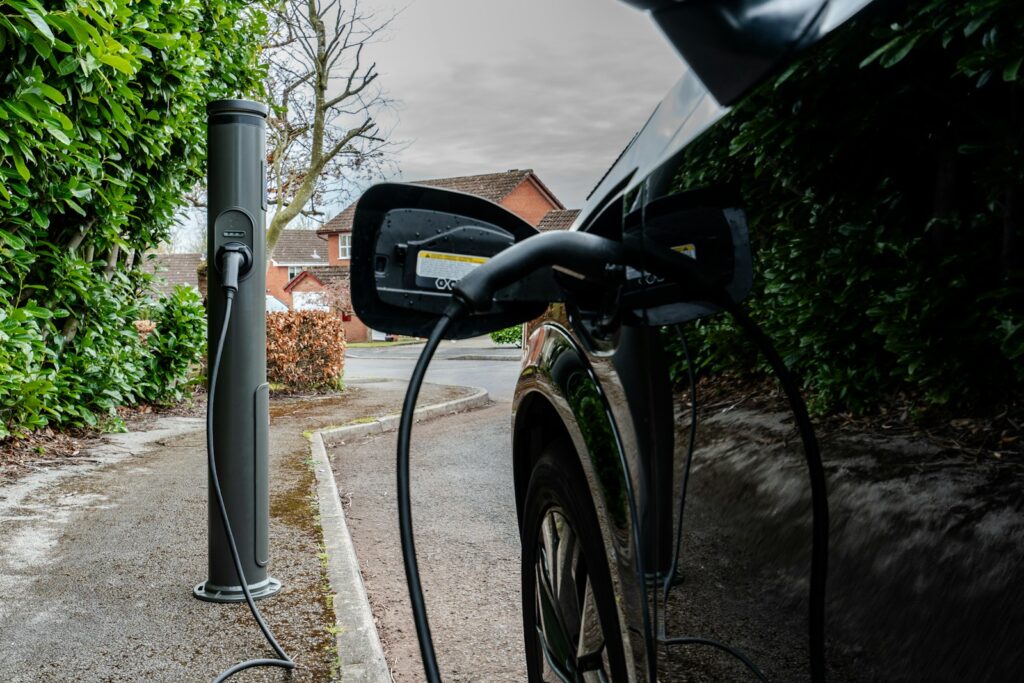
Maya was thrilled when a curbside charger went in two doors down from her building. On a Sunday night she found the spot free, plugged in, and went to bed with a full battery to look forward to. At 7:45 on Monday morning she had a ticket instead. The charging spot sat on the side of the street being swept that morning, and the “EV charging only” sign didn’t cancel the street cleaning sign above it. It’s a common mix-up: a charging space is a special parking spot, not a spot outside the rules.
EV charging and street sweeping
- Short answer
- Charging spaces generally follow the street’s sweeping rules
- New York
- Drivers at curbside chargers must still follow existing parking rules
- Boston
- From Dec. 1, 2026: move within 30 minutes of a full charge, 8am to 8pm
- California
- You can’t park in a designated EV space unless you’re plugged in
- Best habit
- Schedule the charge so it ends before the sweeping window
Are charging spaces exempt from sweeping?
In the cities we checked, no. The charging rule is added on top of whatever the street already had. Here’s what official sources say:
| Where | What the official source says | Source |
|---|---|---|
| New York City | Curbside spaces are for actively charging EVs only, and users must still comply with existing on-street parking regulations | NYC 311 |
| Boston | Spaces are for EVs while charging; the City planned to keep each location’s existing parking rules, such as resident permit parking | Boston curbside EV FAQ |
| Seattle | Only EVs actively using the charger may park; follow all posted instructions, and some spots limit parking at certain hours | Seattle City Light |
| California | Parking in a designated EV charging space is only allowed while the car is charging | U.S. Dept. of Energy (CVC 22511) |
Boston’s interim EV traffic rules from 2025 even spelled it out: all other posted regulations apply to EVs in charging spaces, and street cleaning was listed among the violations that still carry fines. In New York, that means alternate side parking rules still apply to the charging spot if they’re posted on that block.
The rules on a charging space
Even on a day with no sweeping, a charging space comes with its own rules, and they’re stricter than a normal spot:
- Plugged in and charging. NYC DOT says vehicles parked in these spaces but not actively charging may be ticketed by NYPD. Boston says non-electric cars, EVs not actively charging and EVs over the time limit can all be ticketed.
- Time limits. Boston’s June 2026 FAQ described a 4-hour limit that doesn’t apply overnight. Seattle says its charging spaces are time-limited, with the maximum posted on signs. Always go by the sign at your spot.
- Fees for staying too long. Boston’s curbside charging page says that from December 1, 2026, between 8am and 8pm you must move your EV within 30 minutes of charging completion; after that, an overstay fee of $5 per hour, billed per minute, applies.
- No placard shortcut in California. The City of Sacramento notes that disabled person placard exemptions don’t apply to EV charging spaces.
So read two sets of signs: the charger’s sign and the street’s own signs on the same pole or the next one. If you’re not sure how they combine, our guide on how to read street sweeping signs shows how stacked signs work.
Planning a charge around sweeping day
The trick is to think of sweeping as a hard stop for your charging session. A few habits that work:
- Charge the night before, finish before the window. If sweeping starts at 8am, aim to be unplugged and moved by 7:45, not “when the battery is full.”
- Use the app’s session end time. Many charger apps show how your session is going or send notifications; check what yours offers. Set your own alarm anyway, 15 minutes before the sweeping window.
- Don’t take the last spot before a sweep. On the night before sweeping, a spot on the opposite side, or a charger in a garage or lot, can save you the early alarm.
- Put the sweeping days in your calendar. Our guide to street sweeping alerts lists the official reminder services by city.
A real-world example: Maya’s block is swept on Mondays from 8 to 10am. Now she charges on Saturday night instead, when there’s no sweeping the next morning, and only tops up on Sunday if she can move the car by 7:30.
Charging from home with a cord to the street
Some cities let residents without a driveway run a charging cord from their home to their car on the street. Seattle has written guidance for this with Level 1 chargers, and it’s clear about two things. First, the street spot isn’t yours: you can’t use signs or anything else to reserve the space in front of your home. Second, all local parking regulations, temporary and permanent, stay the same and must be followed.
In practice, that means sweeping day still applies to the car at the end of the cord. Seattle’s guidance also requires a visible cable ramp over the cord while charging and says all equipment must be removed when you’re not charging, so unplug, pack the cord away and move the car before the sweeper comes. Check your own city’s rules before trying this; not every city allows it. Our Seattle street sweeping guide covers the city’s sweeping schedule.
Got a ticket at a charger?
Start by looking at the signs again, in daylight, with your phone. Was the street cleaning sign visible from the charging spot? Was the charger’s own sign clear about hours and limits? Take photos of both, plus the charger’s screen or your app’s session history showing when you were plugged in.
That session history is unusually good evidence: it shows the exact minute you started and stopped charging. It can help if you were ticketed for “not charging” while you actually were, or if the timing on the ticket looks wrong. It won’t help if the car was in a sweeping zone during sweeping hours, because charging doesn’t change that rule.
For the full process, see our guide to evidence that wins a street sweeping appeal and how to appeal a ticket in each city. And remember that leaving any car, electric or not, in one spot for days runs into other limits too; see the 72-hour parking rule.
EV owner’s sweeping checklist
- Read both signs before plugging in: the charger’s sign and the street’s sweeping sign.
- Know the time limit of the charging space and whether it changes overnight.
- Set an alarm 15 minutes before the sweeping window, separate from the charger app.
- Avoid charging the night before sweeping on that side of the street if you can’t move early.
- Unplug and move as soon as the session ends, even if it’s not sweeping day.
- Keep the app’s session history for a few weeks in case you need to contest a ticket.
- Charging from home with a cord? Remove the cord and ramp and move the car before sweeping.
Maya still loves the charger two doors down. She just treats Monday morning like it doesn’t exist, and her battery and her wallet have both been happier since.
Spotted something out of date? Report an error and we will check it against the official source. Missing a city? Request it here.
Last checked against NYC 311, NYC DOT, the City of Boston, Seattle City Light, Seattle DOT, the City of Sacramento and the U.S. Department of Energy: November 2026.