
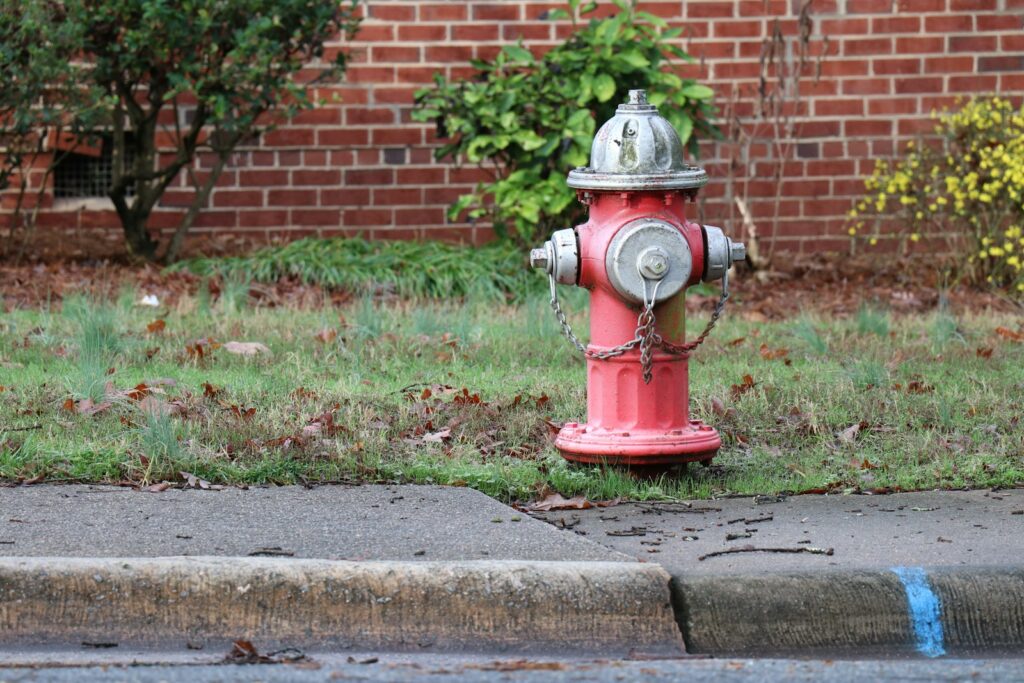
A fire hydrant is the one parking rule that needs no sign and, in most places, no paint. In California, New York City, Chicago and Seattle, you cannot park within 15 feet of a hydrant whether or not the curb is red. In Denver the distance is 10 feet. The tickets are among the most expensive ordinary parking fines, from $115 in New York to $150 in Chicago, and the gap around a hydrant is exactly the kind of “free” space that tempts people on a busy street sweeping day. Here is the rule in each city, how to measure it, and the exceptions that do and do not exist.
Fire hydrant parking at a glance
- Distance
- 15 feet in California, NYC, Chicago and Seattle; 10 feet in Denver
- Paint needed?
- No: the rule applies to an unpainted curb too
- Which side
- Both sides of the hydrant, so about 30 feet of curb in total
- Parking fine
- $115 in New York, $115.50 in San Diego, $150 in Chicago
- Quick rule
- Leave at least one car length on each side
The rule city by city
| City | Distance | Parking fine | Source |
|---|---|---|---|
| California cities | 15 feet | Set by each city; $115.50 in San Diego | Vehicle Code 22514, San Diego fines |
| New York City | 15 feet on either side | $115 (violation code 40) | NYC Department of Finance |
| Chicago | 15 feet | $150, plus a $100 late penalty | Chicago Department of Finance |
| Seattle | 15 feet | $69 | SDOT, municipal court fines |
| Denver | 10 feet | $35 | Denver fine schedule |
In California, section 22514 of the Vehicle Code applies statewide, so the 15 feet covers Los Angeles, San Francisco, Oakland, San Jose, Long Beach, Berkeley and Santa Monica too; each city sets its own fine. San Jose sums it up on its parking regulations page: no parking within 15 feet of a hydrant, whether the curb is red or not, so park at least one car length away. Chicago’s rule is section 9-64-100 of its municipal code.
Why the paint doesn’t tell you
Many hydrants have a short stretch of red or yellow paint next to them, and people treat the end of the paint as the end of the rule. It is not. NYC 311 says it directly: the painted curbs at hydrant locations do not show where a vehicle can park. The same logic applies in California, where the 15 feet comes from state law, not from the paint.
The reverse is also true: many hydrants have no paint at all. A gray curb next to a hydrant is still a no-parking zone.
How to measure 15 feet
Fifteen feet is a little more than one average car length. Because the rule applies on both sides, the no-parking stretch around a hydrant is about 30 feet of curb, roughly two cars.
A quick check that works: stand at the hydrant and take five long steps along the curb toward your car. If your bumper is closer than that, move. And if the gap between two parked cars around a hydrant looks like exactly one empty space, it is almost certainly the hydrant zone, not a free spot.
The exceptions
The exceptions are narrower than most drivers think:
- California: a vehicle can stop within 15 feet if it is attended by a licensed driver sitting in the front seat who can move it immediately. A city can also reduce the distance by ordinance; if it reduces it to less than 10 feet, it has to mark the curb or post signs. Fire department vehicles are also exempt.
- New York City: between sunrise and sunset, a passenger vehicle may stand next to a hydrant as long as the driver stays behind the wheel, ready to move. Leave the car, even for a minute, and the exception is gone.
- Permits and placards: none of the rules above lists an exception for a disabled placard or a residential permit, so neither one makes hydrant parking legal.
Sweeping day and the hydrant gap
The hydrant gap is most tempting when the whole block is moving its cars at once. Picture a Tuesday morning on a Brooklyn street with alternate side parking: everyone has crossed to the other side, the only open curb is a stretch of about two car lengths around a hydrant, and the paint is faded. Parking there swaps a $65 street cleaning ticket for a $115 hydrant ticket.
The fix is the same as for corner spots under California’s daylighting law: move the night before, when there is still a choice of spaces. Our guides on reading sweeping signs and curb colors and driveways cover the other rules you are juggling when you pick a new spot, and the New York City guide explains alternate side parking in detail.
If you got a hydrant ticket
Hydrant tickets are hard to contest because the rule needs no sign. The arguments that can work are about facts:
- Distance: a photo with a measuring tape, or a clear photo showing at least 15 feet (10 in Denver) between the hydrant and your car.
- No hydrant: if a hydrant was removed but the paint was left behind, a photo of the curb with no hydrant is strong evidence.
- Errors on the ticket: wrong plate, wrong location or wrong time.
Take the photos before you move the car. Our guide to appealing a ticket covers the deadlines in each city, and our fines by city page compares sweeping tickets.
Spotted something out of date? Report an error and we will check it against the official source. Missing a city? Request it here.
Last checked against the California Vehicle Code and official sources from San Jose, San Diego, New York City, Chicago, Seattle and Denver: November 2026.