
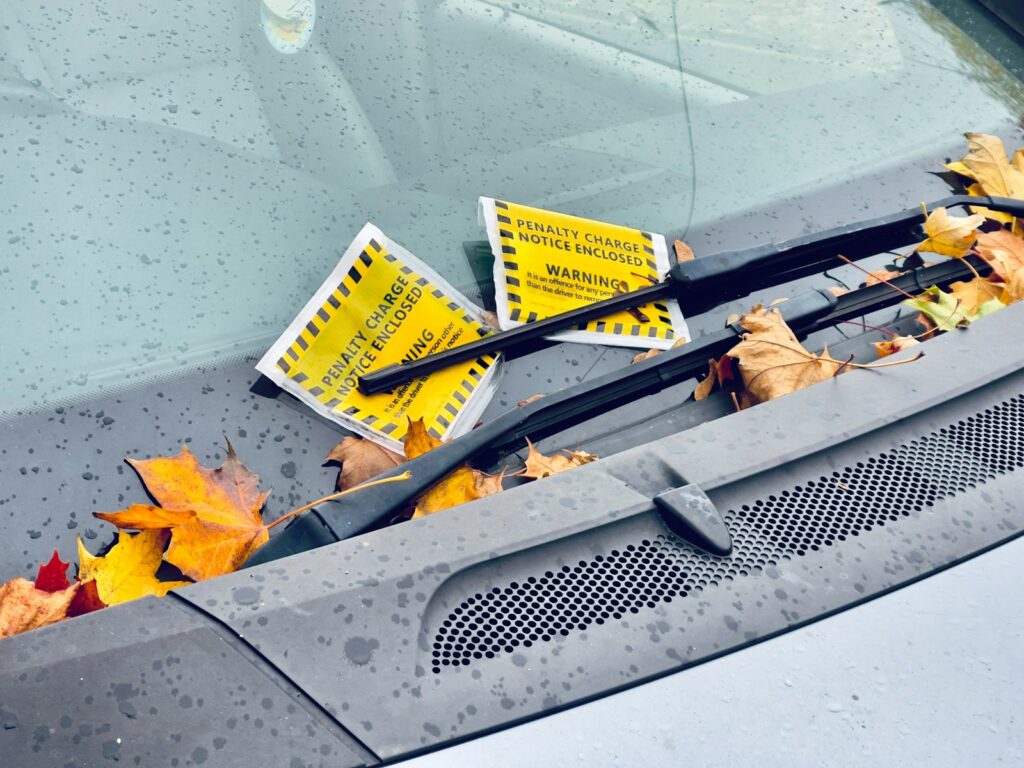
Here is how it usually goes. A $105 street sweeping ticket lands on your windshield in San Francisco in March. You toss it in the glove box, meaning to deal with it on the weekend, and forget. By the time you find it again, it’s a $258 debt, and in August the DMV won’t renew your registration until it’s paid. Nothing about an unpaid parking ticket happens fast, but every step adds money or takes away options. Here is what happens, step by step, in San Francisco, Los Angeles, Chicago, New York City, Boston and Seattle.
Unpaid tickets at a glance
- First deadline
- 15 to 30 days, depending on the city
- First consequence
- A late penalty, often equal to the original fine
- Next
- A hold on your vehicle registration, or collections
- Boot or tow
- After 3 to 5 unpaid tickets, or $350 in judgment debt in New York
- Way out
- Payment plans, offered in most of these cities
The timeline, city by city
| City | Time to pay or contest | If you don’t | Boot or tow | Source |
|---|---|---|---|---|
| San Francisco | By the due date on the ticket | Two late penalties plus a collection fee; DMV registration hold | Tow possible with 5 or more delinquent tickets | SFMTA fees |
| Los Angeles | 21 days | Late penalty, then 14 more days; DMV registration hold | 5 or more unpaid tickets | LADOT |
| Chicago | 25 days after the determination | Penalty equal to the fine; then 22% collection costs | 3 final determinations, or 2 older than a year | Chicago FAQs |
| New York City | 30 days | Penalties and interest; judgment at about 100 days | More than $350 in judgment debt | NYC Finance |
| Boston | 21 days | Late fee; registration and license marked at the RMV | 5 overdue tickets | Boston Parking Clerk |
| Seattle | 15 days | Sent to collections | 4 or more unpaid tickets in collections | Seattle Municipal Court |
Two things stand out. First, the clock starts on the day of the ticket, not the day you find it, so a ticket that blew off the windshield still counts. Second, in most cities the right to contest gets narrower as time passes. In New York, for example, you can only request a hearing on a ticket in judgment if it has been in judgment for less than a year. If you think a ticket is wrong, contest it early; our guide to appealing a ticket has the deadlines.
How much a forgotten ticket grows
The penalties are public, so the math is easy to do. Here is what one street sweeping ticket turns into if you ignore it:
| City | Sweeping ticket | Added if unpaid | New total |
|---|---|---|---|
| San Francisco | $105 | $45 + $63 late penalties + $45 collection fee | $258 |
| Los Angeles | $73 | Penalty after 21 days | $146 |
| Chicago | $60 | Penalty equal to the fine, then 22% collection costs | $120, then about $146 |
In Chicago, the late penalty is equal to the original fine (capped so the total doesn’t pass $250), and if the debt goes to collections, another 22% is added on top. In New York, interest keeps adding up every day once a ticket goes into judgment. A single forgotten ticket rarely ruins anyone; it’s the second and third ones, stacked up during a busy few months, that turn into a real bill.
The registration hold
For many drivers, the first real consequence isn’t a letter from the city but a problem at renewal time:
- California: the DMV cannot complete a registration renewal while the owner has unpaid parking violations on record. Los Angeles notes that unpaid tickets may lead to a registration hold under the Vehicle Code. In San Francisco, if you have five or more outstanding tickets, the city recommends paying in person at the SFMTA Customer Service Center and taking the proof of payment to the DMV.
- Boston: unpaid tickets can mark your registration at the RMV, and the Parking Clerk will only send the electronic release once every ticket you owe is paid.
- Seattle: the court can report unpaid tickets to the Washington Department of Licensing, which holds the registration renewal.
The practical problem: you usually find out when you try to renew online and it’s refused, a week before your tags expire. Paying the tickets then becomes urgent, and in-person payment may be the only fast option.
When the boot comes out
The boot, a clamp on one wheel, is how cities collect from drivers who ignore everything else. The thresholds:
- Chicago: three final determinations, or two that are more than a year old. Once you reach that point, any vehicle registered in your name can be booted.
- Seattle: four or more unpaid tickets in collections put the car on a “scofflaw list,” and it can be booted whether it’s parked legally or not. After a boot, you have 48 hours, not counting weekends, to pay or set up a plan before the car is towed.
- Boston: five overdue tickets put you on the boot list, and the car can be towed at any time after that.
- Los Angeles: five or more unpaid tickets are enough for the city to tow or boot the car.
- New York City: more than $350 in tickets in judgment. The boot fee is $185, plus a $95 execution fee and a 5% “poundage” fee on what you owe, according to the city’s 311 page.
Once a car is booted, the bill includes every overdue ticket, not just the newest one, plus boot, tow and storage fees. In New York, a car towed for judgment debt can be sold at auction if it isn’t retrieved within 10 business days.
Payment plans: the way out
If you’re already behind, most of these cities let you pay over time, and starting a plan can stop the boot:
- Chicago: plans of up to 24 months, or 60 with a documented hardship, with small down payments, according to the city’s payment plan FAQ. A standard plan waives the 22% collection costs and prevents booting for the tickets in the plan.
- New York City: online payment plans for judgment debt, which the city says can prevent booting or towing. Debts of $350 or more need at least 20% down.
- Seattle: a plan with at least 10% down or $200, whichever is greater, even after a boot.
- Los Angeles and San Francisco: both offer payment plans and low-income programs through their official ticket sites; our how to pay a ticket page links to each one.
Our guide to parking ticket payment plans compares the options in more detail, including community service.
A plan only works if you keep up. In Chicago, defaulting on a standard plan brings back the 22% collection costs and can make the car boot-eligible again.
How not to end up here
- Deal with it the same day. Pay online or photograph the ticket and set a reminder for a week before the deadline.
- Check for tickets you never saw. Most cities have an online lookup by plate. Tickets can fall off the windshield or be issued by camera.
- Update your address with the DMV or RMV when you move. Late notices go to the address on the registration.
- Contest early, not late. If you think a ticket was wrong, file the appeal within the first deadline, before penalties start.
- Prevent the next one. Most sweeping tickets come from not knowing the schedule; our city guides explain how to look up yours.
For a side-by-side look at what the original tickets cost, see our fines by city page.
Got the ticket in a rental car? See parking tickets on rental cars and out-of-state plates.
No paper on the windshield doesn’t always mean no ticket: in some cities the sweeper itself carries cameras. See street sweeper camera tickets.
Getting notices for a car you already sold? See parking tickets on a car you sold for the proof that gets them dismissed.
Worried about your insurance or credit score? See whether parking tickets affect insurance or credit.
Lost the ticket itself? See how to find a lost parking ticket with your license plate.
Found a ticket from years ago? See whether old parking tickets expire.
Car already towed? See how to get a towed car back.
Spotted something out of date? Report an error and we will check it against the official source. Missing a city? Request it here.
Last checked against official sources from San Francisco (SFMTA), Los Angeles (LADOT), Chicago, New York City, Boston, Seattle and the California DMV: November 2026.