
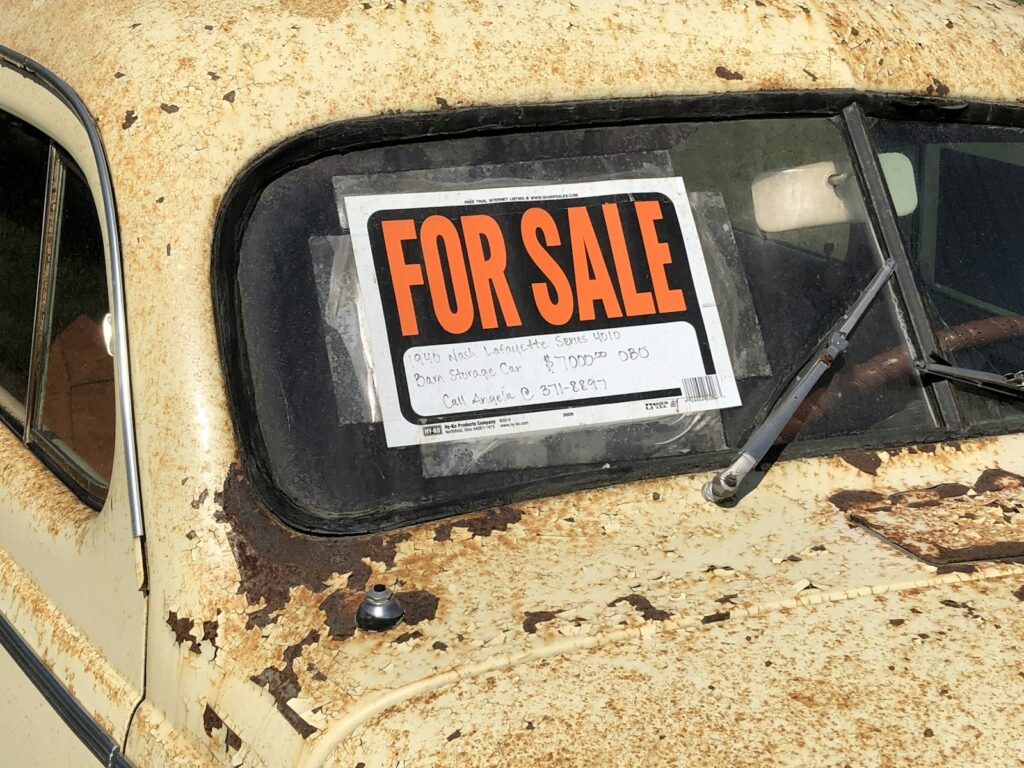
Maria sold her old Civic in March to a buyer she found online. Cash, a signed title, a handshake, done. In June an envelope arrived from San Diego: a street sweeping ticket for a car she hadn’t seen in three months. The buyer never put the car in his name, so the city sent the ticket to the only owner it knew about. This happens more often than you’d think, and whether you end up paying depends mostly on one form you file (or don’t) in the first days after the sale.
Sold the car, still getting tickets?
- Why it happens
- Tickets go to the registered owner on file, and the buyer hasn’t changed it
- What protects you
- The state’s seller notice: California NRL, Washington Report of Sale, Texas Vehicle Transfer Notification
- Deadline
- 5 days in California and Washington, 30 days in Texas
- Best proof
- The filing confirmation, plus the bill of sale, plate surrender and insurance cancellation
- Don’t
- Ignore the notice: late penalties keep running while you wait
Why the ticket comes to you
A parking officer, or a sweeper camera, sees a plate, not a person. The city looks that plate up in the state’s vehicle records and mails the ticket to the registered owner. If the buyer hasn’t transferred the title yet, that owner is still you.
Buyers are supposed to do it quickly (Texas, for example, requires the car to be titled in the buyer’s name within 30 days), but some put it off for months, and some never do it. Until the state’s record changes, every street sweeping ticket, meter ticket and camera ticket points back to your address.
The good news: in most places, a car you no longer owned on the date of the ticket is a full defense. The hard part is proving the date.
What to file when you sell, by state
Many states have a short form that lets the seller tell the motor vehicle agency, “I sold it, on this date, to this person.” It doesn’t transfer the title, but it marks the record and moves responsibility for later tickets to the buyer.
| State | What to file | Deadline | Official source |
|---|---|---|---|
| California | Notice of Transfer and Release of Liability (NRL), online or on form REG 138 | 5 calendar days | CA DMV |
| Washington | Report of Sale, and remove your plates | 5 days | WA DOL |
| Texas | Vehicle Transfer Notification (form VTR-346 or online) | 30 days | TxDMV |
| New York | Surrender or transfer your plates and keep the DMV receipt | Before the car leaves your hands | NYC Finance |
A few details that matter in practice:
- California: once the DMV has the NRL, liability for parking violations after the date of sale passes to the buyer. Filed online, the record updates within one business day and you get a confirmation; print it or save it. On paper, keep a photocopy.
- Washington: the Department of Licensing says sellers must take the plates off the car, and that doing so protects them from parking tickets, speed camera tickets and toll bills. The buyer can’t use your plates.
- Texas: filed within 30 days, the notification means you can’t be held responsible for parking tickets and toll violations the buyer racks up.
Other states have their own version. Search your state’s DMV site for “release of liability” or “notice of sale” before you sell, not after.
The ticket already arrived: what to do
Back to Maria. She has a ticket dated June 2 for a car she sold on March 14. Here is the order that works:
- Compare the dates. The ticket date has to be after the sale date. If it’s before, the ticket is yours, sale or no sale.
- Check the plate, make and model on the notice against your old car. Mistakes happen.
- Find your proof (next section) and contest the ticket within the deadline printed on it. In New York City, for example, you have 30 days to request a hearing before late penalties start. Our guide to appealing a ticket lists the deadlines by city.
- File the seller notice now if you never did. It may not cover tickets that already happened, but it can help stop the next ones.
- Contact the buyer if you can. A reminder that the title transfer is overdue sometimes fixes the problem faster than any form.
If it’s a camera ticket, the photo is evidence for you too: a different body color, a dent you never had, or a bike rack you never owned can help. Our guide to street sweeper camera tickets explains how those are mailed.
Proof that actually works
Hearing officers want documents with dates on them. A text that says “sold it to a guy” won’t do much. New York City’s Department of Finance calls a sale before the ticket a complete defense, but you have to prove it, and it lists the kind of evidence it accepts:
- DMV paperwork showing you surrendered or transferred the plates
- Proof that your insurance was canceled or moved to another car
- Documents showing the car is registered to someone else
Add the confirmation of your state’s seller notice (the NRL, the Report of Sale, the Transfer Notification) and a signed bill of sale with the date, the price, the VIN and both names. Together they tell one consistent story: on this date, the car stopped being yours.
In Texas, if tickets or tolls keep arriving after you filed, TxDMV says you can ask for a confirmation email or request a vehicle record (form VTR-275) showing the month and year of transfer.
If you only found out late
Mail to an old address, a notice that looked like junk, a car sold a year ago: sometimes the first thing you see is a late notice or a collections letter. Don’t let it sit; penalties keep growing. Our guide on what happens if you don’t pay a parking ticket explains the stages.
Many cities still let you reopen a ticket for this reason. In Chicago, for example, a default determination can be challenged within 21 days, and one of only three grounds allowed is that you were not the owner or lessee of the car on the date of the ticket, according to the City of Chicago’s notice guide. New York City’s Parking Summons Advocate can also step in when a ticket was upheld even though the car had been transferred before it was issued.
Selling to a dealer? The dealer usually handles the paperwork, but it’s still your name on the record until it does. Washington’s Department of Licensing, for one, says it’s the owner’s job to confirm the dealer actually filed the report of sale.
Checklist before you hand over the keys
- Write a bill of sale with the date and time, price, VIN, odometer reading and both names and signatures. Keep a copy, or a photo on your phone.
- Take the plates off if your state’s plates stay with the seller (New York, Washington and Texas, among others). Remove the registration sticker too.
- File the seller notice the same day, online if you can, and save the confirmation.
- Cancel or switch the insurance only after the sale is done, and keep the cancellation letter.
- Keep your address current with the DMV, so if a ticket does show up, you find out while there’s still time to contest it.
- Lending, not selling? A friend who borrows your car is a different story: the ticket is still legally yours. Same with rentals, covered in our guide to tickets on rental cars.
Selling in a sweeping city? Remind the buyer to check the signs on their street. Our Los Angeles, San Diego, Seattle and New York guides are a good place to start.
Found an old ticket in collections? See how parking tickets can affect your credit.
Spotted something out of date? Report an error and we will check it against the official source. Missing a city? Request it here.
Last checked against the California DMV, the Washington Department of Licensing, the Texas Department of Motor Vehicles, the NYC Department of Finance and the City of Chicago: November 2026.