
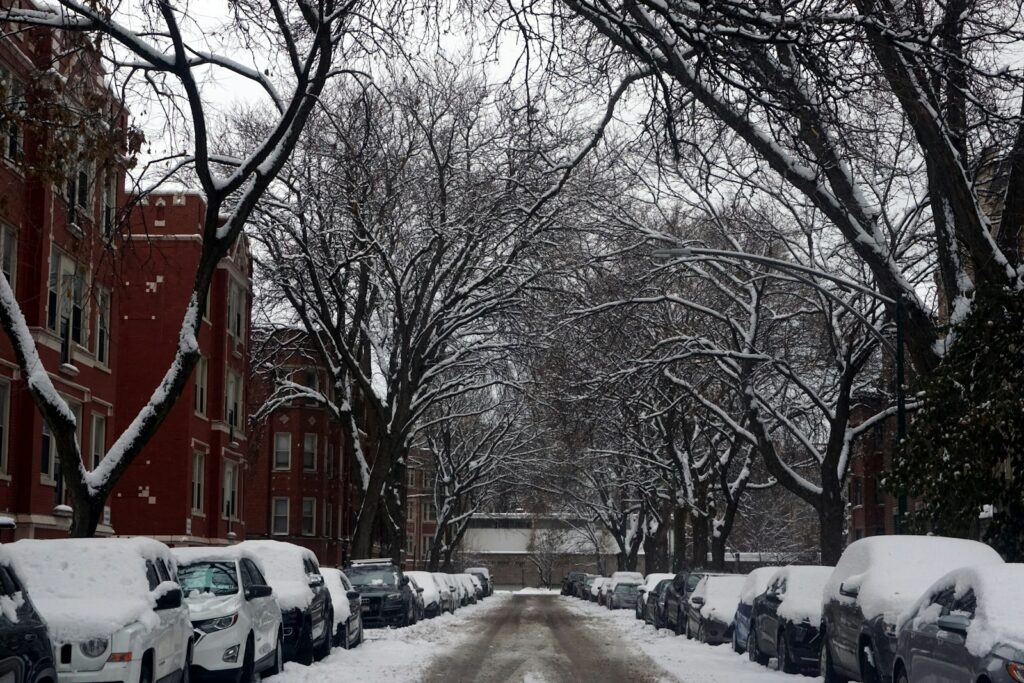
Dave moved from Los Angeles to Chicago in October and felt good about parking by Thanksgiving. He had figured out the orange street sweeping signs, the sweepers seemed to be winding down, and he assumed winter meant a break. Then, at 3am on December 1, a tow truck took his car from a main street he had parked on all fall. Nothing about the sweeping had changed. A different rule had started: Chicago’s winter overnight parking ban. In cold-weather cities, winter doesn’t end the parking rules. It swaps them.
Winter parking at a glance
- Seasonal sweeping
- Many cities pause from late fall to early spring
- Chicago
- Overnight ban on 107 miles of main streets, 3am to 7am, December 1 to April 1
- Boston
- Snow emergency arteries: ticket and tow when an emergency is declared
- New York City
- Alternate side parking is often suspended for snow, but meters still apply
- Best habit
- Sign up for your city’s snow and parking alerts before the first storm
Where sweeping takes a winter break
In the cities we cover, sweeping in the Northeast, the Midwest and the Rockies follows a season. California cities, by contrast, sweep year-round.
| City | Sweeping season | Our guide |
|---|---|---|
| Washington, DC | March to October | DC guide |
| Philadelphia | April to October | Philadelphia guide |
| Denver | April to November | Denver guide |
| Boston (daytime) | April to November; night sweeping on main roads runs all year | Boston guide |
| Chicago | April to November; in 2026 extended to December 17 | Chicago guide |
| Los Angeles, San Francisco, San Diego | Year-round | All cities |
“Off season” only means the sweeping signs stop being enforced. Read the whole sign: Denver’s, for example, list the months of the season, and a sign with no months on it in Boston means the restriction applies all year.
Chicago: the overnight ban and the 2-inch ban
This is the rule that caught Dave. According to the Department of Streets and Sanitation, Chicago’s winter overnight parking ban covers 107 miles of main arterial streets from 3am to 7am, every day from December 1 to April 1, whether or not it snows. The streets carry permanent signs.
The city lists the cost of ignoring it as a minimum $150 tow, a $60 ticket and storage starting at $25 a day. Our guide on getting a towed car back explains the pound process.
There’s a second, separate rule: the 2-inch snow ban. It covers other streets and applies when snow reaches two inches. The city says it isn’t activated often, but cars parked there when it snows can be ticketed or relocated.
Boston: snow emergencies and space savers
Boston works on declared snow emergencies rather than fixed dates. When the mayor declares one, the city tickets and tows cars parked on posted snow emergency arteries, the main roads plows need first. Check the signs on your street to know if you’re on one.
- Discounted garages: some garages offer reduced rates to Boston residents with a resident parking sticker, starting two hours before an emergency is declared and ending two hours after it’s lifted.
- Space savers (the famous cones and lawn chairs): allowed only during a declared snow emergency, and only for 48 hours after it ends. The city notes they’re banned in the South End.
- Alerts: AlertBoston sends notices by phone, text or email.
New York: when snow suspends alternate side parking
New York City’s Department of Transportation regularly suspends alternate side parking for snow. In 2026 it did so several times between late January and February to help with snow operations, according to its press releases.
Two things to keep in mind:
- Suspensions are announced, not automatic. Snow on the ground doesn’t by itself mean you can skip moving the car. Check the city’s announcements; our New York guide lists where to get them.
- Meters still apply. Every suspension notice repeats the same line: payment at parking meters remains in effect.
When the seasons overlap
The trickiest weeks are the ones where two rule sets meet. In Chicago in 2026, sweeping was extended to December 17, while the winter overnight ban started December 1. For more than two weeks, the same driver could face orange sweeping signs on a side street and the overnight ban on the main road.
Late November is similar elsewhere: Denver and Boston’s daytime program are still sweeping while holiday rules kick in. Our Thanksgiving and Christmas guide covers which days are enforced.
And in spring, the opposite happens. Sweeping restarts (March in DC, April in most of the others) and drivers who got used to a sign-free winter collect the first tickets of the season.
Your winter parking checklist
- Find out if your street is a snow route or winter ban street before the first storm, using your city’s map or the signs.
- Sign up for alerts: AlertBoston in Boston, the city’s suspension announcements in New York, 311 updates in Chicago.
- Put the end and start of the sweeping season in your calendar, with a reminder a week before it restarts.
- Know where you’ll move the car during an emergency: a side street, a driveway or a discounted garage.
- Keep the plate number and registration handy, in case you need to search a tow database at 7am.
Dave now parks on a side street from December to April. It’s a longer walk, and a lot cheaper than the pound.
Before the snow comes the leaves; see fall leaves and street sweeping.
In Minneapolis, the big fall sweep ends just before snow season; see our Minneapolis street sweeping guide for the pink signs and the $222 tow.
Planning for spring? See when street sweeping starts again in 2027, city by city.
Spotted something out of date? Report an error and we will check it against the official source. Missing a city? Request it here.
Last checked against the City of Chicago Department of Streets and Sanitation, the City of Boston and the NYC Department of Transportation: November 2026.